
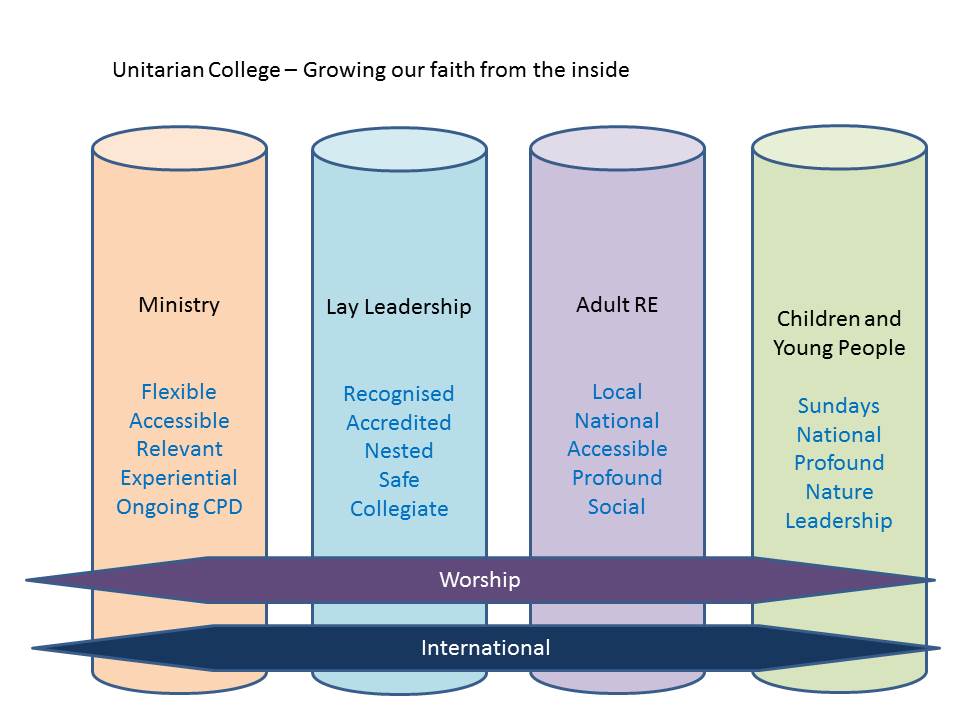
Lay Worship Leadership can look very different to traditional ministry. Within our communities many individuals not only lead Sunday Services, but many other spiritual activities. We offer training to enable our lay leaders to thrive as they offer many different methods of worship and care.
Unitarian College provides training for those just starting the process of worship leadership and provides a whole training pathway through to recognised Lay Leader status with the General Assembly of Unitarian & Free Christian Churches (GA). To become a fully recognised Lay Leader within Unitarianism students are require to complete courses at Foundation, Intermediate and Advanced level, to submit assignments, lead worship, and complete safeguarding training before applying for status.
If this sounds like you, it’s never too early to start talking to people, doing deep introspection, and gather more details about becoming a Lay Worship Leader. Check out the next section for more information:
https://unitarian-college.org.uk/foundation-lay-worship-studies/




Our courses & events
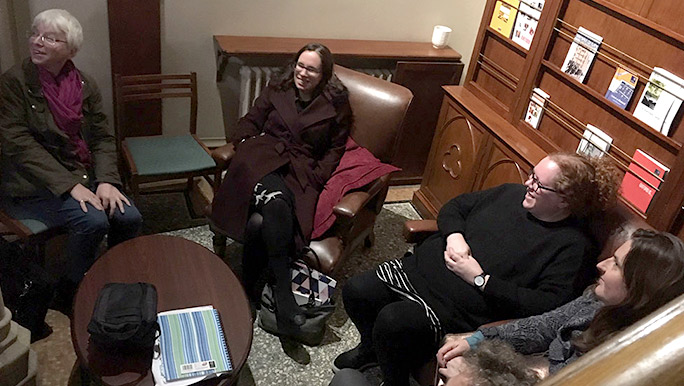
Ministry Training
Unitarian College trains those accepted by the General Assembly of Unitarian and Free Christian Churches for Unitarian Ministry.

Junior Weekend March 2024
Calling on 7-11 year old Heroes to join us the 15th-17th March at The Nightingale Centre at Great Hucklow.

Lay Worship Leadership Foundation Course
We are currently delivering an online course in conducting high quality Unitarian Worship.
Testimonials
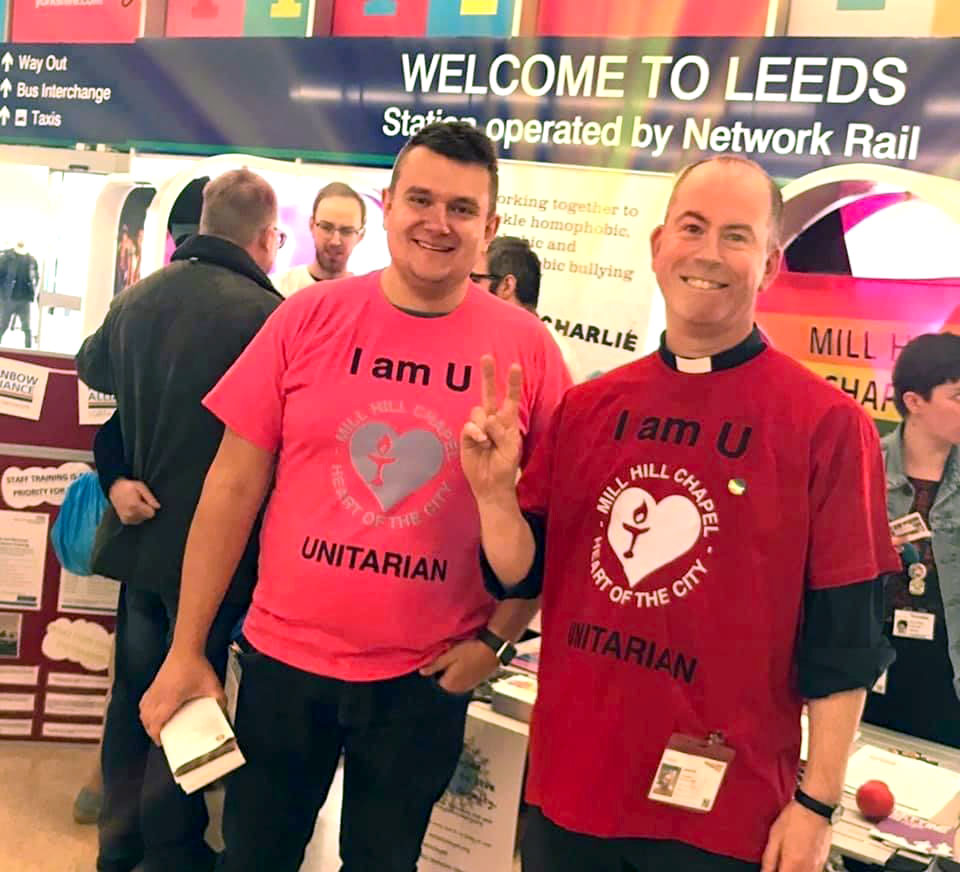 "The formation of the Unitarian College has opened up the possibility of ministry training to people like me, who otherwise would not have been able to study due to the confines of the modern life. As a modern institution UC is very much in touch with the reality. The training programme is tailor-made to fit each student’s individual circumstances. The content of the course is incredibly rich, covering a vast spectrum of topics, using various methods of teaching and student engagement. The ministry training programme perfectly balances being “down to earth” on one hand, and “looking up to the heavens” on the other, placing emphasis on the practical application of the acquired skills, knowledge and insights in the 21st century British Unitarian congregations. The staff went above and beyond to ensure that we still get the same rich learning experience under the restrictions posed by Covid.
But UC is much more than just an educational establishment. It’s a support network for those embarking on a journey of professional ministry. It’s a space where we, students, learn just as much from each other as we do from our tutors. It’s a space where new friendships are made and future professional relationships are formed."